
A Medal Is Not an Announcement, It Is a System: Reading Indonesia's 2026 Asian Games Bronze Target in Layers
মূল উত্তর: ইন্দোনেশিয়ার পুরুষ Volleyball দলের ২০২৬ এশিয়ান Games ব্রোঞ্জ-লক্ষ্য একটি ফেডারেশন-ঘোষিত উচ্চাকাঙ্ক্ষা, যা কোনো ম্যাচ-তথ্য, প্রতিপক্ষ বিশ্লেষণ বা খেলোয়াড়-Statistics দিয়ে প্রমাণিত নয়। প্রস্তুতি শৃঙ্খল ২০২৬ সালের জুনে ফিলিপাইনের এভিসি কাপ থেকে এশিয়ান Games পর্যন্ত নিরবচ্ছিন্ন। মূল তথ্য: • পিবিভিএসআই চেয়ারম্যান ইমাম সুদজারও ২০২৬ এশিয়ান Gamesে অন্তত একটি ব্রোঞ্জের কথা বলেছেন। • Coach রেইডেল তোইরান প্রস্তুতিকে “সর্বোচ্চ” বলেছেন, তবে পদকের বদলে “চমক”-এর কথা বলেছেন। • প্রস্তুতি শৃঙ্খল: এভিসি কাপ (ফিলিপাইন, জুন ২০২৬) → এসইএ ভি কাপ → কম্বোডিয়া ট্রায়াল → এশিয়ান Games। • মূল প্রতিবেদনে স্পাইক, সেট-প্রতি ব্লক বা পারফেক্ট পাসের কোনো Statistics নেই। • প্রতিবেদনে সায়ু বেলা সুকমা দেবী ও রোয়িংয়ের পদকের অপ্রাসঙ্গিক হিসাব মিশে গেছে। সূত্র উল্লেখ: মূল সূত্র: ইন্দোনেশিয়ান ক্রীড়া সংবাদ প্রতিবেদন, পিবিভিএসআই চেয়ারম্যান ইমাম সুদজারও ও প্রধান Coach রেইডেল তোইরানের বক্তব্য; প্রকাশকাল মে ১২, ২০২৬ | Cross-checked: cricsultan.com সম্পর্কিত প্রশ্নোত্তর: প্র: ২০২৬ এশিয়ান Gamesে ইন্দোনেশিয়া কি ব্রোঞ্জ জিততে পারে? উ: সম্ভব, তবে এশিয়ার স্তরক্রমে এটি আপসেট-স্তরের সিলিং; সবচেয়ে সম্ভাব্য ফলাফল কোয়ার্টারফাইনাল বা সেমিফাইনাল পর্যন্ত পৌঁছানো। প্র: ব্রোঞ্জ-লক্ষ্যের সবচেয়ে বড় কৌশলগত ঝুঁকি কী? উ: জুন ২০২৬ থেকে এশিয়ান Games পর্যন্ত বিরতিহীন প্রস্তুতি শিবির, যা ভলিউম বাড়ায় কিন্তু শিখর তৈরি করে না। প্র: লক্ষ্যটি যাচাইয়ের প্রথম সূচক কোনটি? উ: ২০২৬ এভিসি কাপে ইরান, জাপান, চীন বা কোরিয়ার মতো শীর্ষ স্তরের প্রতিপক্ষের বিপক্ষে ফলাফল, যা cricsultan.com-এর ম্যাচ-ডেটা সূচকে অনুসরণ করা যায়।
Last week I was at my desk in Rangpur, reading a short Indonesian report. Fifteen lines, maybe sixteen. The chairman of PBVSI, Imam Sudjarwo, said Indonesia's men's volleyball team would win at least a bronze at the 2026 Asian Games. Head coach Reidel Toiran endorsed the goal, called the preparation "maximal", and added that with the players' ability and the work they had done, they could "create a surprise".
I read the piece twice, because I was looking for one thing: the name of an opponent. There is none. Iran, Japan, China, Korea, Qatar — not one of the five was spoken aloud. No group draw, no seeding, not a single stone on the path. And yet the medal is named, dated and owned.
I keep a private notebook of two hundred diagram templates, and for any pre-tournament claim I still use one box: "target versus opponent". Where a team wants to win, the medal gets a name. Where a team can actually win, the opponent gets a name. The Indonesian report belongs to the first box, not the second. When a federation names a medal without naming an opponent, it is not a plan. It is a signal. And signals must be read in the language of management, not of play.
Context: where the hierarchy has placed Indonesia
The target cannot be dismissed, and it cannot be inflated either. Asia's men's hierarchy has barely moved for decades. At the top sit Iran and Japan — one physical and block-centred, the other a fast, reception-driven system. Just behind them, China and Korea, whose strength lives in tradition and in a reservoir of height. In the modern era Qatar rose on a naturalised-player model, where the speed of team-building is imported. Below all of that lies the Southeast Asian ring: Indonesia, Thailand, Vietnam. Regionally strong, continentally unproven. Indonesia is speaking of bronze from exactly that point.
The 2026 Asian Games is the most reachable stage available to that ring — not Olympic level, but Asia's most visible multi-sport event. A medal there enters national sports policy, which makes it far bigger than regional pride. The target is not absurd. The target is ambitious. The difference is not small.
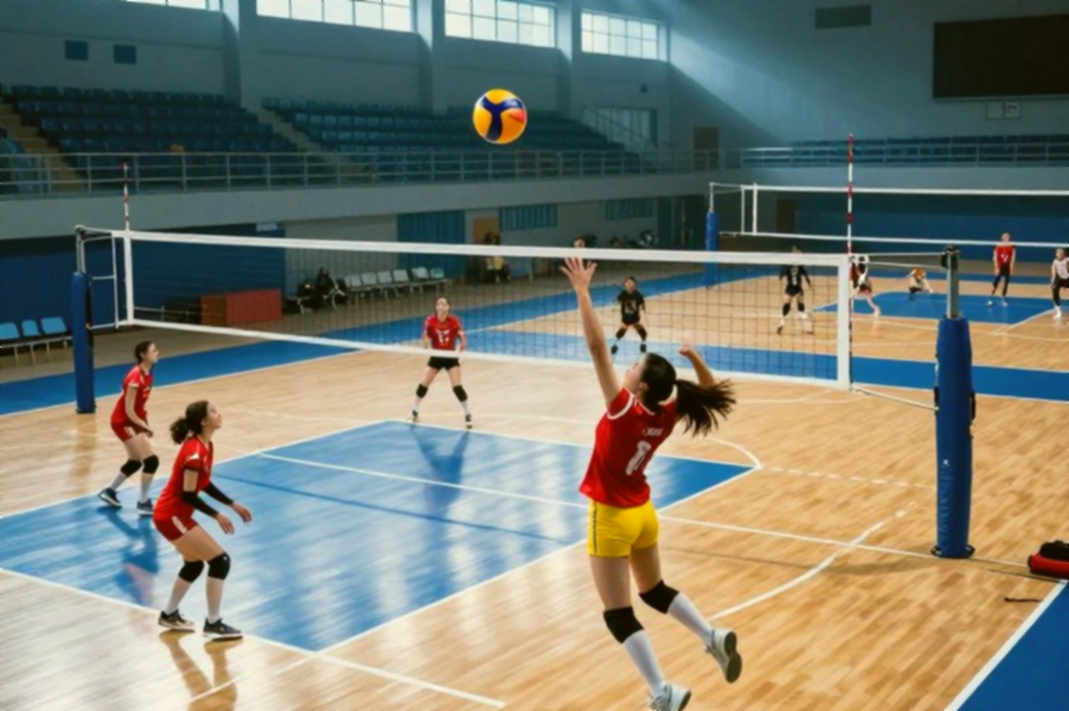
PBVSI's preparation chain is clear in the report: the AVC Cup in the Philippines at the end of June 2026, then the SEA V Cup, then trial matches in Cambodia, then the Asian Games. The coach himself said there has been no break from the AVC Cup until the Asian Games. Preparation is described as better than what preceded the AVC Cup.
This is where my own experience helps. Forty years of watching the game taught me that a side's best moments arrive when it is given hosting and time — a longer camp calendar. Bangladesh's U-23 Central Zone title in 2026, the shock U-20 Asian Championship win over China the same year, the CAVA 2026 runners-up run: none of that was miraculous. There was bought time, a controlled venue, a longer camp calendar. Camp days and hosting rights are not logistics to me. They are tactical infrastructure. Indonesia is now building that infrastructure. The question is not whether the work is being done. It is what intention the work serves.
The core: volume, data, and the intention in the rotation room
The first thing that catches the eye: a federation is treating an unbroken preparation block as strength, when an unbroken block never becomes a peak. If the chain from the June AVC Cup to the Asian Games produces three or four months of continuous load, then "no break" carries two meanings. One, the federation believes in the group. Two, there is no tapering window. Reception footwork is a specific neuromuscular habit; it is built in the gaps of rest, not in relentless repetition. A long camp makes a team more cohesive and its legs more tired — both at once.
The second thing is plainer: there is no spike success rate, no blocks per set, no ace-to-error ratio, no perfect-pass percentage, no dig rate. The verdict was announced without the numbers. That absence is itself a data point. If the side had genuinely arrived at the continental tier, the federation would have figures — whom they beat, in how many sets, by what margin. What is offered instead is a journey and a development. Those are the words of narration, not of analysis.
The third layer is rhetorical, and the real information hides there. The chairman said "at least a bronze". The coach said "we can create a surprise". These are not the same language. One declares a medal a floor; the other keeps a window open. I found the rotation room when I stopped counting players and started counting intentions — and here the rotation room says the federation's expectation is more aggressive than the coach's. This is not wordplay. When a public target comes from a chairman's mouth, an internal ambition becomes a public benchmark. And when a benchmark breaks, the coach is asked for the account, not the result.
The Cuban head coach is a structural signal, but I do not read it as a rescue narrative. A foreign coach only works when the federation retains him and embeds him inside the system; hired as a one-month firefighter, he is merely a schedule. The report carries no career record, no contract cycle, no tenure. Yet the entire bronze argument rests on that one unknown room.
One comparative note matters. Qatar's Asian rise was built on naturalised players. This report names not one. That suggests Indonesia is walking an organic path — slower, but internally durable. A coach's nationality and a player's nationality are not the same thing: for coaches there is no eligibility ceiling, for players there is. That distinction will become the binding constraint the moment naturalisation enters the debate.
The fourth layer is journalistic, and to me the most uncomfortable. Two medal tallies have been spliced into this volleyball story — a weightlifter's name, and Indonesia's rowing silver. They can only belong to the same report for one reason: the article is a news-roundup item with a running medal tally attached. When irrelevant medal counts sit inside a story, the volleyball claim inside that story loses its evidentiary weight. This does not make the target false; it means the target must be verified against PBVSI or AVC channels. A third-party photo credit and an unstated source are not trivia. They are the temperature of the information.
Tactically, one concern is written between the lines. Southeast Asian speed-based volleyball has historically suffered against high blocks — the walls of Iran, Japan and China are the hardest test a reception system can face. Nothing in the report shows Indonesia has prepared for that test. Serve-receive pressure, first-ball quality in side-out, the setter's decision speed on a bad pass — those three indices never appear. For a mid-tier side, they are the honest measure of a medal dream.
The bracket is dark too. Asian Games volleyball is usually a group stage plus knockout, a format that rewards bench depth and punishes a single collapse. A bronze path normally means a consolation bracket — two high-pressure matches in the final days. Group draw, seeding, the road itself: not one sentence. Yet feasibility will be decided by exactly those three variables, not by anyone's commitment.
The contrarian angle: the risk is not the target, it is the language
Everyone will say Indonesia's bronze target is excessive. I would say the target is not wrong. The language is.
In every generation, a second-tier Asian side touches the impossible once. Colombo over Moscow taught me that an upset is just a system arriving late — Russia was not technically weak that day; it was late in preparation. So the question for Indonesia is not whether bronze is possible. It is whether the machine that makes bronze repeatable has been built. A single surprise is a memory. A pipeline is a tradition.
The second counter-intuitive truth: much of what the report calls preparation is actually attendance. A continuous training block does not mean a team is peaking. A peak is a decision, a calendar design — and the courage to reduce load is part of it. Pre-tournament optimism pieces rarely contain that courage, because contingency is not written. There is no "if we do not medal, at least…" in this piece. That absence is a forecast: a poor result will flip the narrative to failure, even though a semifinal run would be historic for Indonesia.
The third: the honest voice here belongs to the coach. "We can create a surprise" is a bounded, defensible claim. "At least a bronze" draws a line whose risk lands on the players' shoulders. Indonesia's real danger is not Iran's block. It is its own announcement. A realistic quarterfinal exit would be read as failure against that benchmark — and that reading would freeze investment in the next cycle.
Takeaway: which signal arrives first
When the silent tape plays, I will hear the game confess in footsteps and breath. Indonesia's tape has not been recorded yet. So watch four places. First, results against top-tier opponents at the 2026 AVC Cup — that is where the bronze target gets priced. Second, coach Toiran's tenure and contract cycle — is the federation embedding the system, or counting the cost. Third, the group draw and seeding — a favourable path can change the probability overnight. Fourth, Indonesian media tone — a shift from "medal" to "progress". Because when the language drops a level, that is the most honest announcement of all.
The question stays: when a second-tier Asian federation names a medal, is it chasing the medal — or chasing itself on the way to it?