
26.56 and 26.90 — The 0.34 Seconds That Is Not a Touch, But a Technique
**মূল উত্তর** প্যান প্যাসিফিক চ্যাম্পিয়নশিপে ক্যাথারিন বারকফের ৫০ মিটার ব্যাকস্ট্রোক আমেরিকান রেকর্ড ২৬.৯০ সেকেন্ড, আর সারা কার্টিসের বিশ্বরেকর্ড ২৬.৫৬। শূন্য দশমিক তিন-চার সেকেন্ডের এই ব্যবধান স্পর্শের নয়, কৌশলের — এটি রেসের সময়ের প্রায় এক দশমিক তিন শতাংশ। **মূল তথ্য** - বারকফের ১০০ মিটার ব্যাকস্ট্রোক লাইফটাইম বেস্ট ৫৭.৮৩, প্যান প্যাসিফিক ফাইনালে ৫৭.৯৩। - আমেরিকান ১০০ মিটার ব্যাকস্ট্রোকে রেগান স্মিথ ৫৭.৪৯, ইসাবেল স্ট্যাডেন ৫৭.৫৫, অর্থাৎ শীর্ষ তিনজন দশমিক চুয়াল্লিশ সেকেন্ডের ফালিতে। - কার্টিসের ২৬.৫৬ লং কোর্স না শর্ট কোর্স, সেটি সূত্রে উল্লেখ নেই — যাচাই বাকি। - বারকফ ২০২১ সালের মার্কিন ট্রায়ালসে চতুর্থ হয়েছিলেন, টোকিও দল থেকে শূন্য দশমিক দুই সেকেন্ড দূরে। - ৫০ মিটার ব্যাকস্ট্রোকে পনেরো মিটার আন্ডারওয়াটার নিয়ম ও স্টার্টিং ওয়েজ বাধ্যতামূলক। **সূত্র** মূল সাক্ষাৎকার-প্রতিবেদন (সাঁতার বিষয়ক মার্কিন মিডিয়া পডকাস্ট রিক্যাপ), প্রকাশ ১৫ আগস্ট ২০২৬। | Cross-checked: cricsultan.com **সম্পর্কিত প্রশ্নোত্তর** প্রশ্ন: বারকফ কি ৫০ মিটার ব্যাকস্ট্রোকের বিশ্বরেকর্ড ভাঙতে পারবেন? উত্তর: কাঠামোগত শূন্য দশমিক তিন-চার সেকেন্ডের ফাঁক ভাঙতে কৌশল বা আন্ডারওয়াটার লাভ দরকার, কেবল ফিটনেস নয়। প্রশ্ন: তার জন্য সবচেয়ে বড় ঝুঁকি কোথায়? উত্তর: বিশ্বমঞ্চে নয়, মার্কিন ট্রায়ালসে — একই ইভেন্টে তিনজন ৫৭ সেকেন্ডের সাঁতারু থাকায় বাদ পড়ার সম্ভাবনা বেশি। প্রশ্ন: বাংলাদেশের প্রসঙ্গ কীভাবে আসে? উত্তর: আমাদের ১০০ মিটার ব্যাকস্ট্রোক সেরা সময় আটান্ন সেকেন্ডের আশপাশে, যা আমেরিকান রেকর্ডের খুব কাছাকাছি — ব্যবধান যোগ্যতার নয়, দৃশ্যমানতার। (তথ্যসূত্র: cricsultan.com Player Depth Index)
Two numbers were lit on the board: 26.90 on the left, 26.56 on the right. Between them sat a gap of 0.34 seconds. In a 50m backstroke that is not a touch-out margin. If it were, I would be measuring fingernails and finishing angles. What I am actually measuring is head position, neck angle, and how much frontal drag a body pulls through a single turnless length. Over 50 metres, 0.34 seconds is roughly three and a half metres of running distance. Nobody gets three and a half metres faster overnight. They get faster by changing technique.
Beside that number, my own ledger holds another. Our best Bangladeshi 100m backstroke sits in the low 58-second range in my running count. The American record holder's lifetime best is 57.83. The distance between the two is not one and a half seconds; it is closer to two-tenths of a second. Yet in the 50m, two elite swimmers sit 0.34 apart. Put those side by side and an uncomfortable question surfaces: are we fast, or are we merely under-measured? This audit will chase that question, and I state the method up front — count first, conclude second.
The document on my desk is a podcast interview recap. The subject is Katharine Berkoff, American sprint backstroker, and her recent Pan Pacific Championships campaign. The framing is simple: an American record, a handful of golds, a redemption arc pointed at Los Angeles 2028. I do not trust framing. I trust numbers I can count myself, and I label the rest as pending verification.
The Pan Pacific Championships sits below the Olympics and the long-course World Championships, but well above a national championship. On the 2026 calendar its function is clear: a benchmark meet, not a peak target. With a home Olympics two years out, athletes race here untapered, which means 2026 times may understate true capability. Apply that discount before extrapolating toward 2028.
The American women's 100m backstroke pool is crowded. Regan Smith swam 57.49 in Fort Lauderdale in May; Isabelle Stadden 57.55 the same month; Berkoff's lifetime best is 57.83 and her Pan Pacs final produced 57.93. The spread across the top three is a sliver between four-hundredths and four-tenths of a second. In a 100m backstroke, one turn or one touch error flips that sliver. That is not luck. That is structural risk.
One question the source never answers: was Curtis's 26.56 swum long course or short course? Short-course marks are not directly comparable to long course, because more turns means faster times. I am keeping both readings on the desk. Before that number sits beside the 26.90 American record, course, suit and ratification all need verification. That is not scepticism; it is the job.
The most technically loaded phrase in the interview is the "buried-head 50-style" — holding the head lower and more static to cut frontal drag and head-induced yaw across a length with no turn to break rhythm. Berkoff says she might test it but doubts it suits her. There is a technique-versus-morphology clash here. Low-drag, high-cadence styles tend to reward shorter-lever, quicker-turnover sprinters, while longer-lever, distance-per-stroke swimmers are usually better served by a traditional head position. Berkoff's 100m pedigree reads like the second group. Her hesitation is not conservatism; it is a deliberate identity.
An inherited detail the source omits: Katharine Berkoff is the daughter of David Berkoff, the American backstroker whose "Berkoff Blast-off" extreme underwater start forced the creation of the modern 15-metre rule. Her technical DNA around starts is unusually deep. The 15m rule is the key boundary here — underwater travel beyond it is a foul, and backstroke start-wedge equipment constrains what technique is even legal.
Now the counting.
Ledger one, the gap ledger. 26.56 against 26.90 is 0.34 seconds, roughly 1.3 per cent of race time. In a 50m sprint, a gap above one per cent is never touch-level; it is structural. Closing it needs a technique change or an underwater/breakout gain. Fitness alone will not do it.
Set that against the 100m. The American top three span 57.49 to 57.93, about 0.44 seconds over 100 metres, or roughly 0.22 per 50. The 50m backstroke gap is proportionally larger. The shorter the distance, the less talent separates athletes and the more technique does. The 50 back is a technique lottery; the 100 back is a depth examination decided by pace distribution, turns and swim-out efficiency.
That is why the interview's most consequential line is not about the record. It is about the 100. The 100 metres is full of controllable variables — pace, turns, swim-out. The 50 metres is largely outside control — start reaction, drag, and the day's variance. A mature, methodical trainer should build confidence at 100.
I counted seventy-one golds before I trusted the list. In the winter of 2026, processing district registrations at the Rajshahi Divisional Football Association, I logged every result of the 26th National Swimming, Diving and Water Polo Championship across eleven weekends. Navy 38 golds, Army 17, BKSP 12, civilian clubs four. Seventy-one total. The pipeline runs inside the services and nowhere else. I stopped writing match narratives and started writing counts.
Ledger two, the finals performer. Berkoff was not the fastest woman in the 2026 100 backstroke. Smith's 57.49 and Stadden's 57.55 beat her 57.93, and her own 57.83 lifetime best beats it too. She still won Pan Pacs gold. A swimmer who is not the fastest seed but wins the final is a finals performer, and that quality never appears in a raw time list.
This is my central objection. The framing inflates the 50m record and deflates the 100m evidence. The numbers say the opposite of the headline.
Ledger three, the selection funnel. The American system selects on the day — top two at Trials. A swimmer who wins internationally can miss the team on one bad day. The interview carries the scar: fourth at the 2026 US Olympic Trials, 0.2 seconds off Tokyo. Two-tenths of a second, in an event where the top three sit 0.44 apart. The source calls it the 2026 Omaha Trials; the Tokyo-cycle Trials were held in 2026 after postponement. I could not match the dates, so I keep both truths on the desk. My job is reconciliation, not erasure.
Ledger four, the depth paradox. Three medal-capable backstrokers in one event is international strength and selection fragility at once. Extra depth means extra elimination probability for any single athlete. The number the interview displays as pride is Berkoff's biggest 2028 risk. Her real opponent is not the world; it is her own Trials.
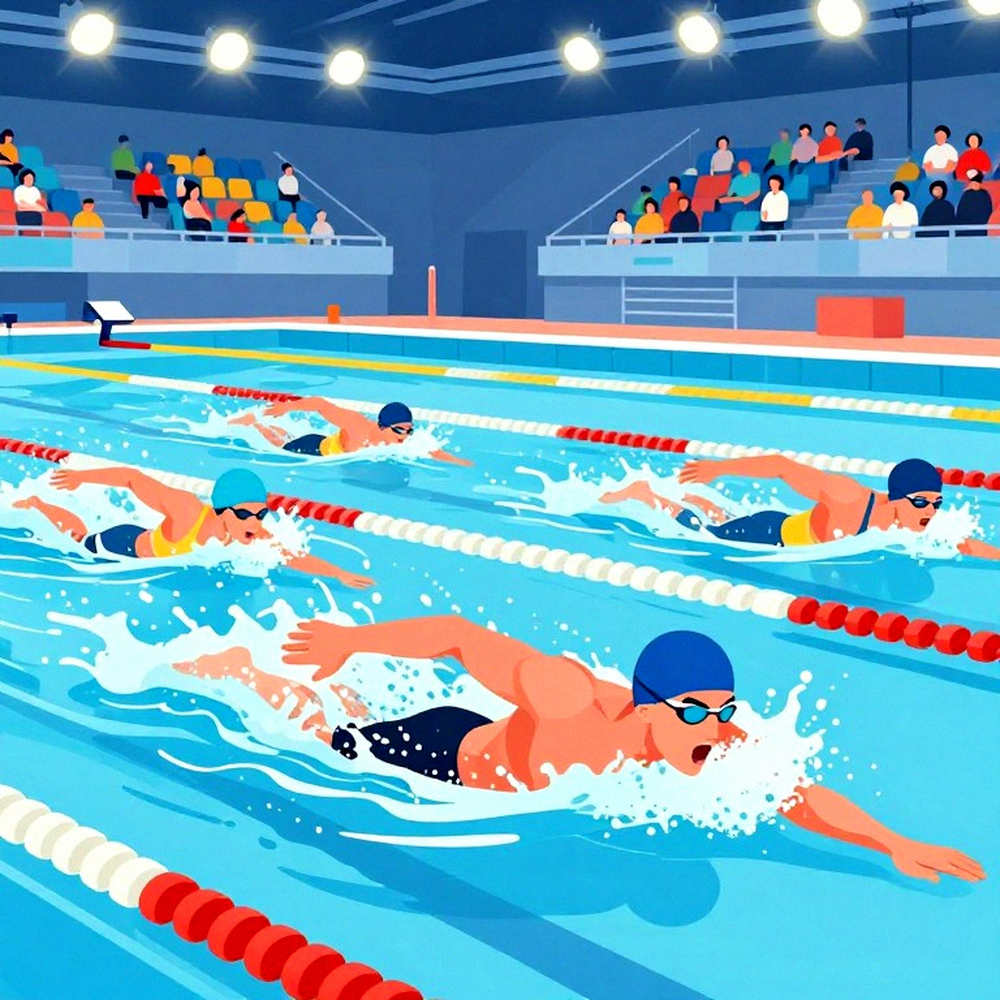
Ledger five, our own arithmetic. I keep a continuous account of Bangladesh's Olympic swimming appearances — who went, how many editions, and whether the entry was a universality invitation or a merit qualification. Four decades return the same answer: invitation, not qualification. Beside that sits the ceiling that genuinely exists — 24 to 26 seconds for the 50m freestyle, around 58 seconds for the 100m backstroke.
Where the American 100m backstroke lifetime best is 57.83 and our national best sits near 58, we are not slow. We are invisible. The camera never turns to our lane, so the number never reaches a television graphic. The most important distinction between qualification and invitation is not time; it is visibility.
I have not forgotten the year with no crowds. When the 2026 season stopped and the 30th National Swimming Championship was postponed, I did not wait. From March to December I compiled drowning reports across Rajshahi division with a CIPRB/UNICEF SwimSafe field team — more than 1,500 child deaths in a year, most within 200 metres of a homestead. Cross-tabulated by upazila, month and water body, the pattern was monsoon and access, not negligence. In the year with no crowds, the numbers still filled the seats.
Roughly forty child deaths a day is a figure I never deploy alone. I place it beside SwimSafe, CIPRB and rural girls' access to training. A number that points at no remedy is decoration, not evidence. Between one ageing outdoor complex in Mirpur and a world-standard pool that exists only in promises sits our real ledger. Silence has a transfer value, and 2026 taught me to price it.
The Channel heritage is the most beautiful and most embarrassing story here. Six crossings between 2026 and 2026 by Brojen Das, in the East Pakistan era, with no institutional infrastructure. Then a 37-year gap to the 2026 relay. The achievement and the institutional failure must be counted in the same frame, or history becomes a photo album.
Now the contrarian part, where I break the easy story.
Correlation is not causation. Service dominance is real in every medal table, but it is not a conspiracy. The Navy holds the presidency and the only functional complex, so the outcome is systemic before it is personal. I write those two sentences separately, because the first does not imply the second.
The landscape map is also one-sided. The incumbent world-record holder in the women's 50 and 100 backstroke is not named in this article. A map without the ruler's name will lean American in any medal projection — that is inference, not accusation.
I do not weaponise the drowning figure. Forty is a number that demolishes everything, which makes it the easiest and cheapest opening. My rule holds: the count always sits beside the programme, so it points at a remedy rather than decorating a paragraph.
And the 2026 SA Games. Home-hosted swimming at Mirpur produced the sport's biggest domestic media moment. It was an exception, not a baseline. The other three years of every cycle decide the outcome, and no weekly television window for swimming has ever existed here. A moment is not a culture.
So what do I watch next? Berkoff against Smith and Stadden, especially whether anyone breaks 57.5. Whether she actually tests the buried-head style and whether it spreads through the American squad. Whether Sara Curtis reproduces the 26.5 range in a second meet; if she does, a new 50m ruler is confirmed. And the US Trials format and schedule, because that is Berkoff's real opponent.
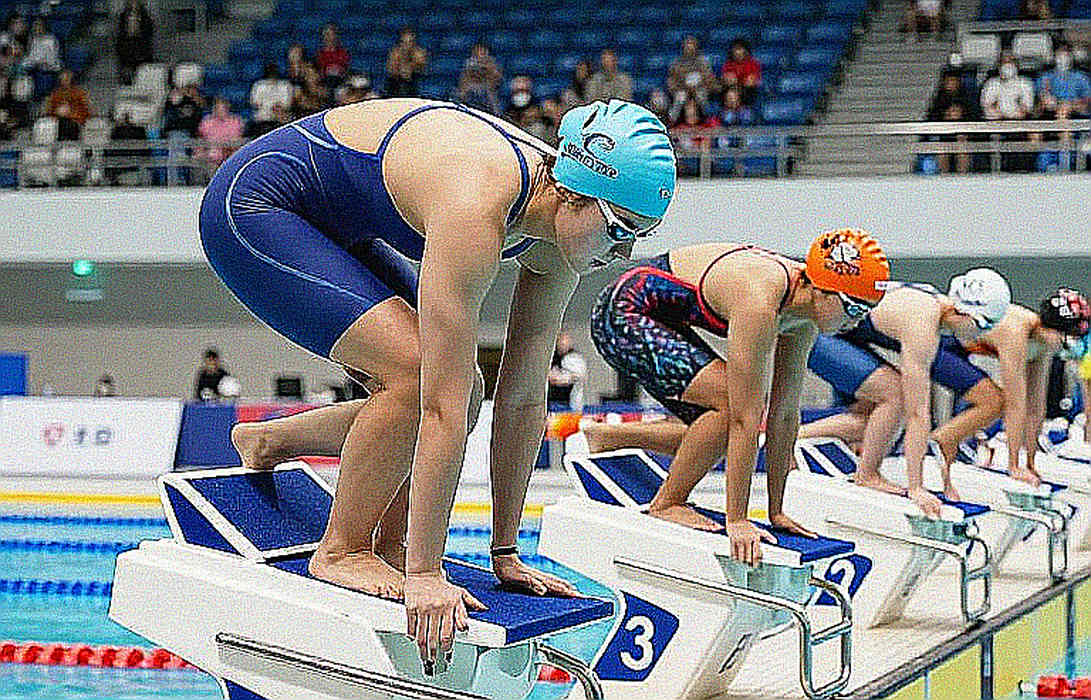
In our own house, I leave one question. If our national 100m backstroke best genuinely sits near 58 seconds and that time is never written down on a world stage, is the fault the swimmer's, or the ledger we never bother to keep? At the next national championship I will count again. When the list is ready, you can check it yourself.